News
Being There: More Than Just a Workshop
 Some days ago, we visited a school in Eliseni and the town hall of Secuieni, bringing a variety of activities and materials with us. We organized workshops for children, teenagers (from first to eighth grade), and adults. For our group, the workshop process began earlier with the planning, writing, and organization of the activities we wanted to offer to the participants.
Our main activity focused on upcycling. After showing a short introductory video on the topic and discussing how waste materials can be transformed into something new and useful, we moved on to the practical part.
The participants worked in small groups to design and create a game from scratch, such as a basketball court, using only the recyclable materials we had brought with us, including cardboard boxes, plastic bottles, markers, and colored paper. Alongside this main activity, we played games and dedicated our attention to the participants, ensuring that they felt appreciated, valued, and supported throughout the process.
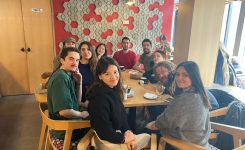
During the evaluation session at the Yellow House, we concluded that we had successfully engaged many participants and sparked interest and curiosity about sustainability in some of them.
At one point, Mate joined the conversation and said something we will not forget: “We, ATA, are the opportunity these children have.” This idea completely changed the way we viewed the workshops and the project as a whole.
Our main goal was not simply to involve participants in activities. Our most important objective was to be there. Simply being present meant showing them new perspectives and possibilities they may not have known existed. These workshops are not about us or our performance in the classroom. They are about the participants, for the participants, and created together with the participants, regardless of who facilitates them.
Therefore, our primary objective is to be present and active. That day, we made them laugh, run, create, and explore. Not every participant became fully involved, but every one of them witnessed and experienced a workshop based on non-formal education.
We still have room to improve as educators, and we are aware of that. However, we were there, and we shared that experience with them. We believe that this is what truly matters.