SEARCH
News

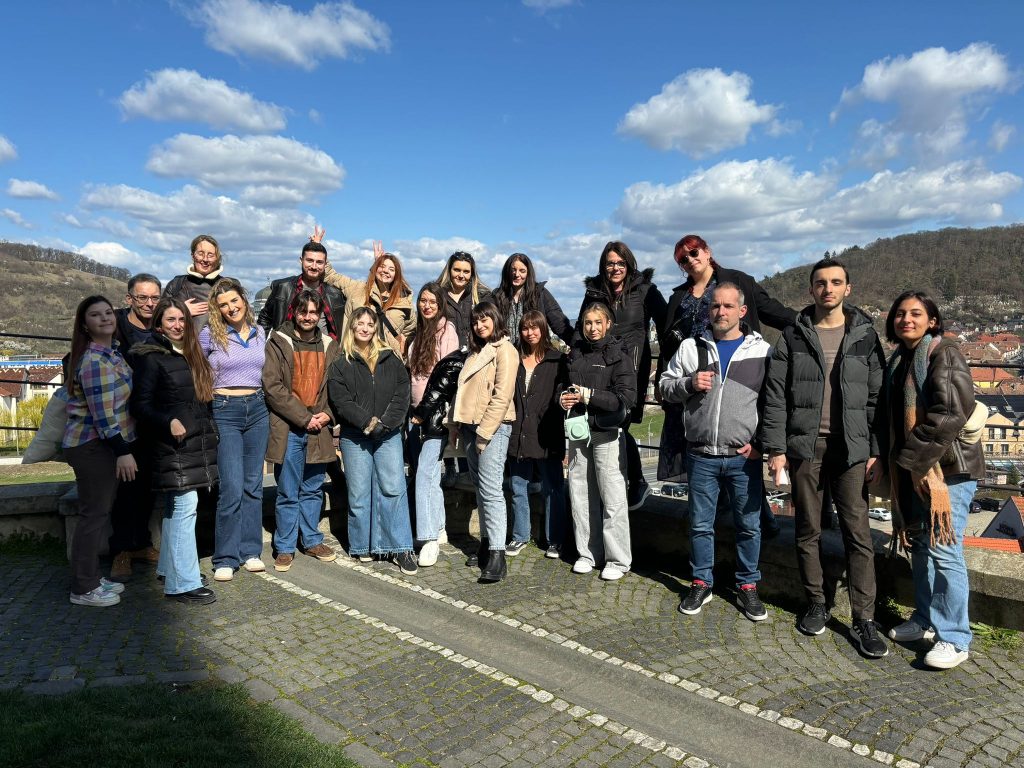
In the last week of March, as Easter approached, an exceptional opportunity arose for three young people from Transylvania to participate in a unique journey. From March 24th to 31st, they embarked on a journey towards their inner child. Our team of three embarked on this self-awareness journey to Klaffer, a small Austrian village, to participate in the SOULFUL: a path to embrace your Inner Child training organized by our partner Kinderfreunde. Read on for their report.


The journey wasn’t without its hiccups, but we managed to turn the long wait to our advantage. Before our training, we explored the beautiful downtown of the capital, rich in classical buildings.


Arriving in Klaffer, in the beautiful venue of Mühlviertel, after enjoying a warm dinner, we immediately began getting to know each other in a playful way. We ended the long day with rest, acquainting ourselves with our temporary home.


We started the first day by getting to know each other on a deeper level, aiming to become a real team for smooth collaborative work. In addition to games, we gained some basic psychological knowledge, focusing on self-awareness and connecting with our inner child through artistic and communicative activities. The group quickly bonded, as shared board games and conversations became a familiar routine after meals.


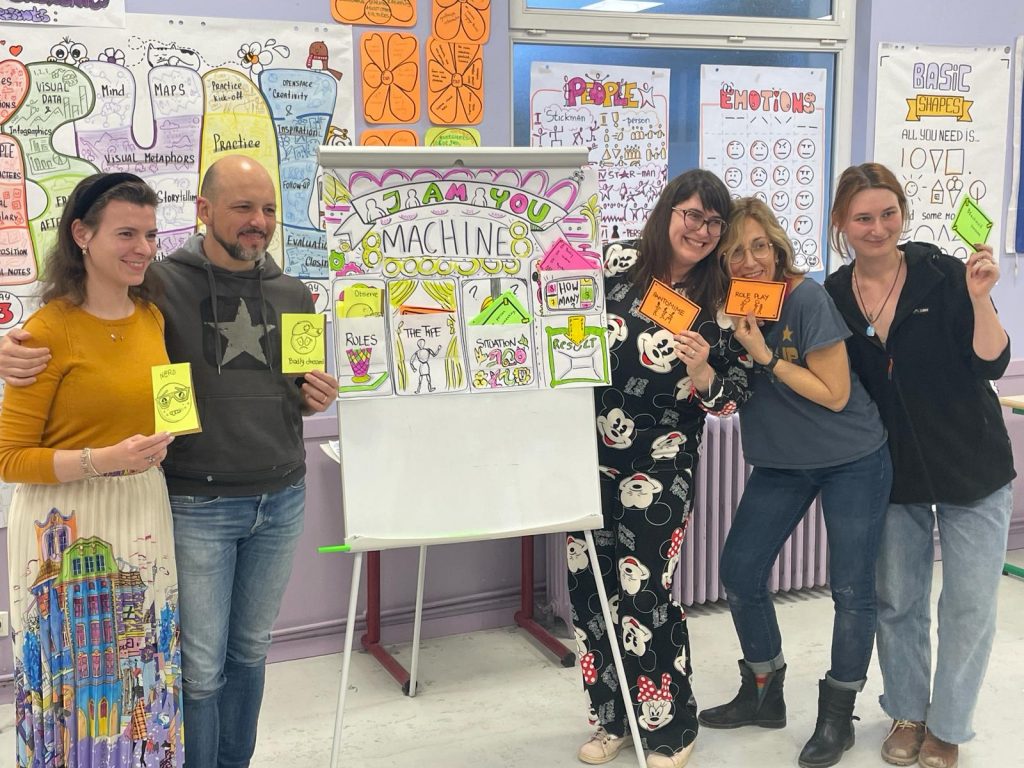
The second day focused on exploring the sources of our everyday behaviors and manifestations based on the theories of psychologist Eric Berne, and we examined the roles we play in different life situations. We quickly put theory into practice by creating short plays, and in the afternoon, we delved into one of the most unconventional trends in literature: the Dadaism of the 20th century. The emphasis here was also on experiential learning, so we immediately engaged in entertaining creations.


One of the highlights of the training was the cultural evening, where participants from eight countries had the opportunity to introduce the group to the food, customs, dances, and backgrounds of their own countries. Our team provided a taste of Romanian, Hungarian, and Szekler cultures, which naturally included dancing and toasting.


On the third day, another art form took center stage: the art of photography, which allowed us to become writers and poets again for a short time. During our improvised exhibition, we got a glimpse into the wonderful world of Vivian Maier’s photographs. In addition to the continuous team-building and self-awareness exploration, the afternoon was spent deepening our relationships and tuning into each other, during which we indulged in “positive gossip” divided into small groups.


“Fun is a serious thing.” This was the motto of the fourth day, which allowed us to fly back to a happy childhood, reliving the joy and curiosity of being a child, which still lies deep within us. We rediscovered the pleasure of small things, such as blowing bubbles, and then playing our favorite childhood games again. In the afternoon, we participated in a special program as we visited the Villa ingenious, Museum of Perception.


By Friday, we could consider ourselves a tightly knit team, so we were tasked with putting together our own play, which was performed at the end of the day. In our performance, we tried to summarize the activities and lessons of the week in a humorous, playful, and occasionally deep way, which we also formulated during the evaluation on the last full day.


With a heavy heart, we bid farewell to Klaffer on Sunday, which had become our home over the past week, as it was also a spiritual journey that enriched us with unforgettable experiences and memories. Close relationships were formed as we quickly tuned into each other while trying to connect with ourselves, our inner voices, and, most importantly, with the sincere, liberated, curious, and playful child within us.

0

News

We have reached the end of our first training session of the year 2024. Committed and motivated participants from 10 countries, including Turkey, Greece, Bulgaria, Hungary, Croatia, Slovakia, France, Poland, Spain, and Portugal, joined us to further develop the skills they will apply as future teachers and trainers in educating the next generations.


Unlike the usual location in the center of Cristuru Secuiesc, this time we held our program in a more spacious environment thanks to the Sóskút Hostel with unexpected but warmly welcomed guests in the form of two deer and a fox.


Our first day focused on getting to know each other, exploring each other’s and the project’s background. After team-building games and naming our hopes, fears, and rules, participants went for a city tour, which was unfortunately shortened by the weather. However, this did not deter the group, and they returned to their exploratory tour in the following days. As a conclusion to the day, we organized the now-traditional intercultural evening, where everyone brought typical snacks and drinks from their own countries.


On the second day, we delved into learning methods, different educational systems, trainer responsibilities, as well as communication and body language, through various group and individual tasks. At the end of the day, among various non-formal methods, role-playing and the Coffee Chain Game resonated most with the participants.


The focus of the next day was primarily on group dynamics and conflict resolution, followed by individual development targeting active listening, our own behavioral patterns, and the study and practice of vocal elements of speech. The day ended with exploring individual learning styles and completing a personality test.


Our training’s fourth day was also intensive for our participants. They learned how to give feedback properly, presented theater performances on various mistakes a trainer can make during a session, and delved into exploring SMART goals. Alongside the wealth of useful information and work, entertainment was not neglected. Some participants organized a game night, welcoming fellow participants with poker, jungle speed, uno, and many other interesting games.


On the fifth day, participants finally reached the practical point of the training when they began preparing their own plan. Of course, after a long week of hard work, they deserved some brief cultural leisure time. Therefore, we changed the location of the activities to the beautiful streets of Sighisoara, where participants discovered the beauty of the city, tasted traditional foods, and admired the colorful and atmospheric buildings. Last but not least, they also visited Dracula’s birthplace, a must-seen part of Transylvania.


Approaching the end of the project, on the sixth day, roles were reversed, and the participants became the trainers. We heard 8 sessions on various topics, chosen and developed by the groups themselves. The short trainings were related to the following topics:

  • Gypsy Culture
  • Aphrodite’s complex
  • Stress management
  • Gender equality
  • How to teach ADHD students successfully
  • The risks of the internet
  • Sustainable tourism
  • Subjectivity of truth

To ease the excitement and nerves, participants organized a Guessing Game Party in the evening, where eventually forming one big team, they played for the ultimate secret prize.


We couldn’t spend the last day any other way than by immersing ourselves in the labyrinth of memories and bringing forth the knowledge and emotions accumulated throughout the week. After participants wrote their YouthPass, which certifies the competencies developed during the training, we jointly evaluated the week with a good conversation and started bidding farewell with “sometime, somewhere in Europe, we will meet again” sentences.


Summing up the results of the 7-day training, we have a successful project behind us, which dealt with useful and much-needed topics, as judged from the pictures and feedback. We are grateful to the Erasmus+ program for the funding, to the partners for their assistance in selecting and preparing the participants, to the trainers for their selfless and persistent presence and help, and finally, to the members of the teams for their unwavering dedication and interest in our training.


0

News

The week between the 2-10th of March was very productive and full of excitement. Andreea Staicu, Ana-Maria Răducan and Teodora Răducan are the participants who represented Romania in the InFormal Creativity: Go Visual project, organised in Lisieux, France, by the LeLab Lisieux Normandie Association together with participants from Spain, Greece, Italy, Poland, Germany, Lithuania, Turkey and, of course, France.


The first day was about getting to know each other and working together, using of course creative methods of expression. Each participant had to draw their name without using letters and then introduce themselves to each other. Another getting-to-know-you game, in which participants asked each other questions, helped to build group cohesion and create a space of mutual trust and support.


Then we all received drawing materials and were able to experiment with all sorts of materials together, so that day by day we all deepened graphic and composition techniques, basic elements for visual presentations. We started with frames inspired by our surroundings and not only, then moved on to creative and colourful fonts, contrasts and created a poster that brought together all the elements we learned in the early days.


Mind-mapping sessions and infographics followed. Each participant represented themselves with a mindmap and then, in groups, we made infographics about the project or interesting topics in order to practice what we learned.

We then discussed about presentations and the importance of visuals in creating an interactive presentation. We started with an example and, in pairs, analysed it and translated it into images to convey the content in a more engaging way.


As a final assignment, the participants worked either in groups or individually to create visual materials for a personal project, using the knowledge they had acquired throughout the training. Two groups created boardgames, one group created a poster, one participant created a presentation on art therapy and another on the negative effects of digital addiction and how to use social media and the phone less.

The whole process was concisely and professionally structured and facilitated by Eduard and Vera. They encouraged us throughout the week, guided us and helped us learn in a creative environment, working together to improve everyone’s creative skills.


In addition to the project activities, intercultural evenings were organised, where each country briefly presented their culture, traditions, landscapes, made interactive quizzes with prizes or danced traditional dances together.


Moreover, each evening was also marked by extra activities such as: improvisation theatre workshop (facilitated by Ana-Maria, Andreea and Teodora), art therapy (Joanna), doodling (Eduard), human library (Tobi), zentangle (Vera), dymanic drawing (Estel, Lucia and Julia). All these activities, together with the enthusiasm of all the participants and the desire to learn from each other, created a unified group, where we helped and encouraged each other and spent nice time together.

We also visited the towns of Deauville and Trouville on the Atlantic coast of France and a cider-making farm on our free afternoon.


Although the participants have now returned to their homes, the project is not over yet. Next up is the dissemination part, where teams from each country will implement what they have learned by organising workshops in their communities. There will also be a 10-day drawing marathon, where each of the participants will be able to rediscover and put into practice what they have learned in the training.


0

News

March 17 marks the beginning of our first training of the year, supported by the Erasmus+ program, where topics essential for educators such as communication, behavior, conflict management, learning methods, training objectives, and many more will be highlighted.

A total of 22 participants from 11 countries will attend the program: Spain, France, Slovakia, Poland, Hungary, Portugal, Greece, Bulgaria, Croatia, Turkey, and Romania.


During the week-long training, participants will delve into the following topics:

  • How do we learn?
  • Duties of the trainer
  • Training phases
  • Communication process
  • Body Language
  • Insights into group dynamics
  • Conflict resolution
  • My own behaviour
  • The tone
  • Active listening
  • Learning styles Classification of learning methods
  • The 20 peaks blunders during performance
  • How to Give and receive Feedback
  • How to prepare a session


This will be followed by the preparation of their own session, which will be put into practice among the participants in front of each other.

All activities will be implemented through non-formal learning methods.


In addition to learning, the programme also offers the opportunity to explore the local area. On the fourth day of the training, participants will have the opportunity to take part in an organised tour to discover the old town of Sighisoara, with its rich cultural and historical heritage. The training will take place from 17th to 23rd of March, in the framework of our Youth Startegy.

0

Projects

Enhancing youth voice for diversity and inclusion

Youth INC


Call: Erasmus-Youth-2023-CB — Capacity Building in the field of Youth 

Reference number: 101130662 

Duration: 24 months 

In the YOUTH INC. project 6 partners (NGOs and youth led organisations) from Hungary, Romania, Germany, Kosovo, Albania and Israel will work together to increase the quality, perception and capacity of youth workers, and young people through learning for diversity and inclusion.

Through the NGOs and youth workers involved in the project, young people will learn about critical thinking, exploring topics of anti-racism, minorities, diversity and inclusion. Using this method and with the help of experts, young people will identify cultural and ethnic minority heroes who have played a significant historical, economical and/or cultural role in the life of the community without recognition, who have represented important universal values.

At the end of the process, virtual monuments will be inaugurated, bringing the heroes who had been invisible before to light.


Project coordinator:

Anthropolis Antropológiai Közhasznú Egyesület, Hungary


Project partners:

Youth Agency from Germany

Interfaith Encounter Association from Israel

Act for Society Center from Albania

Center for Counseling, Social Services and Research from Kosovo

Youth Association from Transylvania

Our first milestone: Methodological Handbook
Our second milestone: Methodological and Technigal Guide for finding and honoring invisible heroes
Our third and biggest milestone:
Celebrating Everyday Heroes Across Europe
YouthINC: Ünnepeljük a hétköznapi hősöket Európa-szerte

ONLINE on the IZI.TRAVEL application or HERE.
Download the collected stories HERE

0

Projects

Call: 2023 Round 3 SPR ESC30-SOL – Solidarity projects 
Project Number: 2023-3-RO01-ESC30-SOL-000184494 
Duration: 12 months 

Objectives:
• To raise environmental awareness and educate members of the community about the importance of local biodiversity;
upcycling and composting; selective trash collection and recycling; and reduction of water and air pollution – The organizer
team expects at least 120 people to attend the organized workshops. The aim is to have at least 30 participants during each
workshop organized throughout the year.
• To encourage people to adopt small, easily maintainable habits in their everyday lives that can reduce their ecological
footprint and help develop a more environmentally conscious and sustainable community for future generations – The
organizer team expects at least 160 people to attend the organized practical events. The aim is to have at least 40
participants on average at all events throughout the year.
• To improve the health of the local ecosystem and reduce waste and pollution – The organizers aim to plant at least 20
trees and 50 other flowers or plants, build at least one bee hotel and five bird feeders and organize at least one common
trash collecting action.

Expected outcomes:
• Increased Awareness – Through the education of the local community on important topics, such as the importance of the
local biodiversity, upcycling, composting, selective trash collection, and reduction of water and air pollution; people will
become more aware of their actions and the impact they have on the environment.
• Improved Environmental Health – The aim of the project is to promote sustainable practices that will help reduce waste,
pollution, and improve the health of the local ecosystem. This will be beneficial for the health of the local community since it
will result in cleaner air, water, and soil.
• Strengthen Community – By organizing events and activities for the community, people will have an opportunity to interact
with each other, work together, and bond over a common goal. This will promote a sense of belonging and social
connectedness.
• Economic Benefits – Since the project promotes upcycling, recycling, and composting, it also encourages people to reuse,
or find alternative utilization for their resources, for example, use an empty jar as a container for rice. This should also help
reduce the need for new materials and ultimately lower people’s expenses. On a broader scale, by promoting selective trash
collection, the community will be able to reduce waste management costs. This is important since, unfortunately, we, as a
global population, are facing an energy crisis, inflation, and uncertainty. Being able to adapt any habits that might bring an
additional layer of safety and stability into their lives would be beneficial.

Project team:
Natalija Atanackovic
• Gabriella Orosz
• Dániel Kacsó
Timea Böjte
• 
Mihály Fazakas
0

News
At the beginning of the 2023 year, we launched a new project with our Greek partner You In Europe called Get The Net, where we organised activities for young people on the opportunities offered by the European Union, on aspects of environmental protection, also several skills development activities in the field of self-development.


“The fourth trimester of the GET THE NET PROJECT is closing, and our networking project is coming to the end. It was a year full of activities and initiatives dedicated to young people, as “GET THE NET” brought together a consortium of partners with the same approach to the involvement of young people in Democratic participation, inspiring a mentality of active participation and aiming to create the citizens of tomorrow. 

We managed to give space to young people to make themselves heard, we informed them about possible opportunities for contribution, involvement and participation in democratic procedures, and gave them the tools in order to create the local societies they want to live in. 


The 11 members of our network from different European countries, gathered all their energy, imagination and ideas, and designed, organised and implemented a series of activities in the important social issues:


More specifically we organized:

36 Infodays on environment, the protection of the animals, cyber bullying, healthy lifestyle, 3Rs (reduce, reuse, recycle) in waste, inclusion and multiculturalism


44 Empower Days,
on the opportunities that young people have through the initiatives of the EU and the European Commission for issues such as the innovative entrepreneurship, learning mobility, voluntarism, creative arts, European projects etc., self-branding & CV as a way to promote themselves and last,  advocacy and ways to claim rights or solutions for issues affecting the local communities.


20 Youth working Groups,
promoting the youth creativity especially of those youngsters that live in social margins


5 Training of Trainers,
that offers the necessary tools to the youth workers, in order to act as coaches of young people when they want to take initiatives for their local societies.


3 Simulation Events,
to promote the active participation of young people through the dialogue with local authorities in order to gain voice, role, position and experience in the frame of their local society.

16 Web-radio // Podcasts, where local youngsters had the chance to plan, create and implement their broadcasting shows, based on social issues related to active participation and citizenship.”


We are all excited for this collaboration, filled with more passion, initiatives and knowledge to move on.

Check out more here: https://www.getthenet.eu/

Partner Organisations

You in Europe

Menų agentūra Artscape

Xeracion

Casa da Juventude de Amarante

Сдружение “Вдъхновение” / Association “Inspiration”

PiGreco – SEMI di Intercultura APS

Institute of Youth Power Croatia

Stowarzyszenie Rozwoju i Integracji Młodzieży STRIM

CODEC

Youth Association from Transylvania


0

News
Our young volunteers explored Álora to learn about gender equality through different artistic way, also to develop their knowledge about the situation of the domestic violence against women and men in Turkey, Portugal, Poland, Italy and Spain.


On 25th of November we started our travel with minibus, then changed to a plane and finished the long trip with a train from Málaga to Álora which is a small but charming town in Spain. It was around 8pm when we arrived, after that we got a tour around our accomodation and working place, Casa Imagina, then ate some typical Spanish dinner.

Next day we started our day with an energizer, then we got a clock to write others’ names to each hour as “dates” to get to know each other better and to break the ice between the participants. After the teambuilding activities, we talked about our fears, expectations and our contribution connected to the youth exchange with which we could benefit the work of the team. We also agreed on the rules of the YE.
The coordinators presented to us the schedule of the week, then we were introduced to the workshops we will be attending and the cleaning schedule since everyday we cleaned Casa Imagina showing respect for the cleaned place they provided us, also it was a good bonding with the other teams and with eachother too.
After this, we went for lunch, we ate a really good local soup, local meatballs with tomato sauce and a local sweet for desert.
In the afternoon we played cohasion games to strengthen our trust towards each other, then in the evening we tried out each cultures gastronomy’s specialities during the Intercultural Snack Night. 


On the second day we dived into the topic of the exchange and started the workshops by a discussion about controversial themes and we had to decide that we agree with or not, or maybe we are neutral with some stereotypical statements regarding gender-based activities and attitudes.
After we talked about other crucial aspects like sex, gender and gender confusion, we worked in groups to make freezed scenes about different moments of the daily life to get into and practice our acting skills.
In the afternoon we dyed T-shirts in purple which symbolize gender equality.
In the evening we had a cultural night for Romania and Poland, where we learned and showed traditional folk dances. I can say that I am proud of our team since we were in the first raw during each dances through the week.


In the next morning we started the activities with a discussion about all the official types of violence: verbal, physical, psychological, socio-economic, and sexual violences.
After identifying these, we got separated to five teams with all members from different countries. Our goal was to present the five types of violence in short theater scenes. After presenting them, we split up again to five teams to create banners on against violence, which we brought later on to Álora.
As a closing activity for the day, we learned Italian gestures, Portuguese stereotypes and some cool dances from both countries.


Next day, after a rough start in the morning, since we had some problems with our stomach which can happen with anyone when they are traveling to a different country with different types of food, we went to Álora by bus. In the city center we listened to the mayor’s speech about violence against women within the framework of a bigger ceremony. After the speech and celebration, we played the Gymkhana game, where we explored the city of Álora in national groups, so our youngsters had to work together to solve the tour game by visiting the attractions of the city.


On the fifth day we had free time to look around, therefore we decided to visit Málaga and to spend the day there. When we arrived in Málaga center by train, we explored the beautiful city center, we saw Soho street which is an artstreet full of wall paintings drawn on different styles, and naturally the spectacular Christmas decorations all around the city center. We also bought a lot of souvenirs decorated with the main attractions of Malaga, e.g. bulls, cactus, dancing figures and so on. For a lunch we went to an Italian restaurant, where we ate pasta, pizza and lasagna and have been loyal to our motto: “Sharing is caring”.
After that, we visited the Plaza Málaga, a game store, then climbed up to the Gibralfaro where we just caught the wonderful view of the sunset over the city and the harbour.
In the evening we also tried Japanese cuisine which we found interesting and unusual but also delicious.


On the next day we went back to the topic of the exchange. The first workshop was about being in national teams and making a presentation about violence against woman in our country. After this we had a coffee break and for the next session we organized different scenes about violence against woman which depicted kidnapping, murder, cheating and toxic relationship within family. After lunch we relaxed a bit, had a siesta as almost local people, also socialized with the members of other teams. After our free time we worked more on our scenes and dressed up for the main rehearsal. Following the coffee break we did our theater plays and we watched each other’s as well. 
After the pizza-dinner the Turkish and Spanish team presented their own cultur where we learned how to dance a typical Turkish wedding dance and an easier Spanish dance. In the evening we said farewell to our Polish team, because next morning they were going back home.


The last day was about evaluation of the week, cleaning up and writing our YouthPasses. Our exchange in Álora, Spain was an amazing experience for all of us, we had the chance to learn a lot about the topic of gender equality in general, but also we learned a lot about other countries’ situations, and we cannot forget how much fun we had during the theater exercises, so we want to send our love and appreciation to IMAGINA for hosting this Y.E!

0

Projects

Youth Power in Motion – Empowering Students for Advocacy and Change

Call: European Youth Foundation – Pilot activity

Reference number: 7995.1.PA.2023

Duration: 12 months

Objectives

Our main objective with this project is to support young people in Cristuru Secuiesc in forming and operating the local city student council by selecting and training the members of this council, also by organising workshops for them in the topic of advocacy.

Objective 1 – Supporting the existing school councils.

During the project one of our objectives is to examine the existing student councils in the 3 high school, recruit new members if it is necessary and select members who can take part in the training sessions organized by our association, then share the knowledge with their peers and implement activities at school level.

Objective 2 – Strengthening communication and collaboration between young people and the local municipality.

Another important objective is to create a link between the local youth and municipality by forming the student council of the town, also by teaching student council members to effectively communicate their ideas and proposals to the local decision-makers.

Objective 3 – Empowering young people to take an active role in decision-making processes

During the project we would like to provide training and resources to help young people develop the skills and knowledge needed to participate in local decision-making processes, such as community development initiatives.

Expected outcomes

Among the results and expected outcomes of the project we can mention:

  • Improved civic engagement: Through lobbying at the municipality and designing a strategy for civic participation, students can learn how to engage more effectively with local government and promote positive change in their community.
  • Enhanced critical thinking and problem-solving abilities: The project can encourage students to think critically about complex issues and develop creative solutions to address them.
  • Improved communication skills: Students can practice and develop their communication skills through the lobbying and negotiation components of the project.
  • Concrete policy changes: students will conduct research and analyze the needs of the community, then they will design a strategy for those issues and needs. Depending on the topic that the students choose to lobby on, there may be specific policy changes that could be achieved through their efforts.
  • Young voices at the municipality: during the project students will have meetings with the members of the municipality, they will participate the monthly council meetings, where they can share their concerns, ideas and strategies. The project could help local decision-makers to see young people’s needs and issues more clearly and to be more receptive to discussing young people’s ideas.
  • More quality events at town level: Our association plans to reach out to these young people and support them in organizing events that are aimed at the community of the town, because based on our research, there is a demand for this as well. We believe the project will also help these young people learn how to provide quality recreation opportunities for the community.

Project coordinator: Ungvári Borbála

Related articles:

https://www.ata-ro.eu/hu/hirek/utjara-indult-legujabb-fiatalokat-osszefogo-projektunk.html

https://www.ata-ro.eu/en/news/we-have-started-our-newest-youth-project.html

https://www.ata-ro.eu/en/news/the-student-council-is-working-on-implementing-their-ideas.html

https://www.ata-ro.eu/hu/hirek/otleteik-megvalositasan-munkalkodik-a-varosi-diaktanacs.html

https://www.ata-ro.eu/hu/hirek/lezarultak-a-projekttevekenysegek-a-varosi-diaktanacsnal.html

https://www.ata-ro.eu/en/news/youth-power-in-motion-the-student-council-continues-the-activities.html


0

News

Gathering her courage, our newest member Gabriella set off alone to the city of ancient Greek architecture to discover her inner leader, her strengths and weaknesses, and to gather new ways to improve them, during a training course organized by our partner You In Europe.


“During the trip I already had a chance meeting with another participant, thanks to a unique pattern of trousers, because already at the Bucharest airport I noticed the dress style of the Bulgarian participant from Spain, which accompanied me at various points of the journey, until I was certain at a bus stop in Athens , that we are probably going to the same place, and so I started a conversation.

This is how many of my friendships, perhaps for life, began.


On the first evening, almost everyone had already arrived for dinner, after which a small conversation developed between the participants. My Szekler, i.e. Romanian Hungarian identity was not at all strange or complicated, as a truly international group had gathered, officially representing 12 countries, but more than that in terms of ethnicity. There was a Spanish-speaking participant representing France, Croatian and Argentinean members in the color of Austria, and I could even mention again my friend who was born in Bulgaria but now works in Spain. I think the rich background has created a strong bond between everyone from the very first moment.

The first official day of the training was of course focused on getting to know each other, noting names and people, discussing the program’s rules and participants’ fears, requests and consent, which was followed by the introduction of YouthPass through non-formal activities.


As the second day dawned, we threw ourselves into the mapping of leadership skills and types with full force. During the team tasks, after presenting the different styles in a short play, we analyzed the behavior of the protagonists of a story from the perspective of the leader’s five key competencies, which led us to the conclusion that we can either be born leaders or just beginners, nobody is perfect, and everyone can improve.


The third day showed a very colorful palette with activities such as shooting a commercial, learning about the steps of team forming outdoors, and after lunch, learning about the importance of communication skills and techniques. During one of the exercises, although humorous, the cultural diversity of the team members caused a lot of complications, as some of them could only speak to each other in their mother tongue, which made it a bit difficult to work together, but in the end, everyone managed to complete the task successfully.


On the fourth day of the training, we explored the more serious topics of SWOT and PEST(EL) analyses, also examined methods for managing change and conflict in teams. A very interesting exercise for me was to help us understand the power of questions, where after the introduction of closed, open and perspective-changing questions, we had to reveal the identity of a mysterious figure by asking carefully thought-out questions.

Arriving at the last day, we received a real “leader” guest, who as the inventor of the Save the Hood environmental protection initiative presented their activities on the coasts of Greece, also revealed to us the secret of the well-oiled system of the work process with thousands of volunteers.


To conclude our activities, emotions came to the fore as everyone shared their thoughts and feelings about the week during the evaluation. For me personally, it was a great opportunity to discover the world and myself again on my own, which, although it may have been a series of obstacles, I feel I managed to overcome. Apart from the friendships I made with the participants, I came away from the training with a wealth of experience and knowledge that I will certainly use in the future in my work at ATA.”

0